 Boulder HVAC ServicesBoulder HVAC Services
Comfort that holds up here.
Looking for an HVAC contractor in Boulder for a furnace that won't fire or an AC that quit during a Table Mesa heat spell? This is a working crew that handles heating, cooling, ductless systems, and indoor air quality across the city — from the older bungalows of Mapleton Hill to newer builds out in Gunbarrel. Pricing is quoted as an honest range up front, and the exact number is confirmed on a free on-site visit before any work starts.
📞 Call (720) 832-9439
Text or call about your hvac contractor job — a quick photo helps us quote fast.
A firm, all-in price confirmed before we start — no surprises.
On time, done to standard, and tidy when we leave.
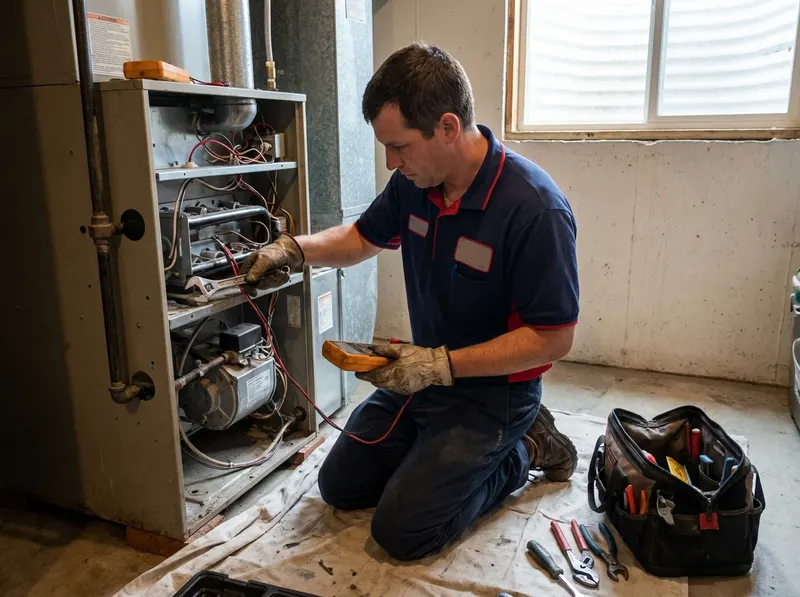
Boulder homes lean hard on their furnaces from October through April, and the failures follow patterns tied to how the systems were installed and used. In older Mapleton Hill and Whittier houses, gravity-era conversions and long duct runs often mean a strained blower motor or a control board that finally quits after decades of cycling. In Martin Acres and Table Mesa, where mid-century ranch furnaces are common, the frequent culprits are a cracked hot-surface ignitor or a dirty flame sensor that trips the unit into a lockout. Cold snaps rolling down off the Flatirons and through the NCAR mesa expose these weak points first, which is why no-heat calls spike on the first hard freeze.
Furnace repair is the right choice when the unit is under roughly 12 to 15 years old, the failure is a single identifiable part, and the heat exchanger is sound. A replaced ignitor, blower capacitor, or control board on an otherwise healthy furnace is far cheaper than a new system and buys many more seasons of service. Replacement becomes the smarter call when the furnace is near end-of-life, the repair cost approaches half the price of a new unit, or a cracked heat exchanger is found — a safety issue rather than a fix. A technician will lay out both paths honestly during the diagnosis so the trade-off is clear before money is spent.
Altitude matters in Boulder. Furnaces here are derated for elevation, and a unit that was never properly adjusted for around 5,400 feet can run rich, soot up the burners, and trip safety limits — mimicking a component failure when the real issue is combustion tuning. Homes above town in Wonderland Hill and the west end of Newlands see this more often. Part of a thorough repair visit is confirming the furnace is burning correctly for the local elevation, not just swapping the part that failed and leaving.
Most repairs in Gunbarrel, North Boulder (NoBo), Chautauqua, and University Hill wrap up in one visit because the high-failure parts — ignitors, flame sensors, capacitors, and common blower motors — are carried on the truck. When a proprietary board or an OEM-specific part has to be ordered, the furnace is left as safe as possible and the return visit is scheduled quickly. Every repair starts with a firm price after diagnosis, so there are no surprises once the panel comes off.
| Diagnostic / minimum service call | from $150 (applies toward repair) |
| Flame sensor clean or replace | $150 - $250 |
| Hot-surface ignitor replacement | $200 - $350 |
| Blower capacitor / run capacitor | $150 - $280 |
| Control board replacement | $400 - $650 |
| Blower motor replacement | $450 - $650 |
Most no-heat furnace calls in Boulder are handled same-day or next-day. Common parts like ignitors, flame sensors, and capacitors are stocked, so the majority of repairs finish in a single visit.
Furnace repair in Boulder typically runs $150 to $650 depending on the failed part. The $150 minimum covers diagnosis and applies toward the repair; the exact total is confirmed on-site before any work begins.
In Boulder, short-cycling is most often a dirty flame sensor, a clogged filter, or a furnace running rich because it was never derated for the roughly 5,400-foot elevation. A diagnostic visit isolates the exact cause before recommending a repair.
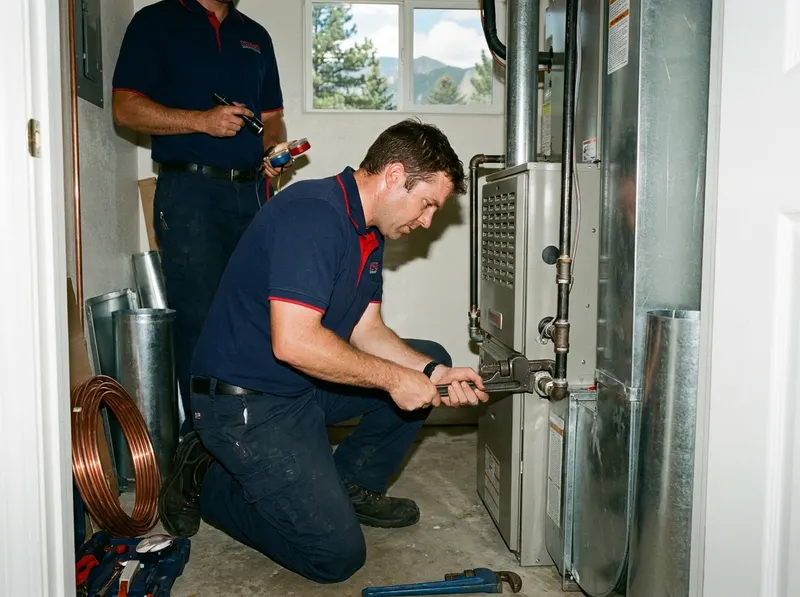
A furnace replacement makes more sense than another repair once a gas furnace passes 15 years, shows a cracked heat exchanger, or needs a repair costing more than a third of a new unit. Older single-stage furnaces common in Martin Acres and University Hill rentals often struggle through a cold Boulder January, while a two-stage or modulating unit holds temperature more evenly across drafty older layouts. If your current furnace is under a decade old and heats reliably, a targeted repair is usually the better spend; replacement is the call when parts are failing repeatedly or your energy bills climb every winter.
Sizing is where altitude changes the math. Boulder's elevation means a gas furnace loses roughly 4% of rated output per 1,000 feet, so a unit sized off sea-level charts will short-cycle or leave rooms cold. We calculate load based on your actual square footage, insulation, and window count, then set gas pressure for high-altitude operation. Historic homes in Mapleton Hill and Whittier frequently have undersized or restricted ductwork that we inspect before committing to a furnace size, since a large unit forced through tight ducts wastes both money and comfort.
Efficiency choice ties to your home and how long you plan to stay. High-efficiency condensing furnaces (95%+ AFUE) suit the larger Newlands and Wonderland Hill homes that run the heat hard, and their sealed-combustion venting works well for tighter, newer North Boulder (NoBo) construction. A standard 80% AFUE unit costs less up front and fits many Table Mesa and Gunbarrel homes with existing metal flues, avoiding the added cost of PVC venting reroutes. We lay out both paths with real numbers so the decision is yours.
Venting and combustion air often drive the final quote more than the furnace itself. Condensing furnaces need PVC intake and exhaust runs and a condensate drain, which adds labor in finished basements near Chautauqua where wall access is limited. Older Boulder homes may need a chimney liner or a fresh combustion-air source to pass code. Every install includes a startup test and a walk-through so you leave knowing the system runs safely before we go.
| Diagnostic / service minimum | $150 |
| Standard 80% AFUE furnace replacement | $3,800 - $5,500 |
| High-efficiency 95%+ AFUE furnace replacement | $5,500 - $8,500 |
| Added PVC venting / condensate reroute | $400 - $1,200 |
| Chimney liner for older Boulder homes | $600 - $1,500 |
Furnace installation in Boulder typically runs $3,800 to $8,500 depending on efficiency rating, unit size, and any venting changes. These are ballparks; the exact price is confirmed with a free on-site assessment. Our minimum charge is $150.
Replace your furnace in Boulder when it is over 15 years old, has a cracked heat exchanger, or needs a repair costing more than a third of a new unit. A newer furnace that still heats reliably is usually worth repairing instead.
Yes, Boulder's elevation near 5,300 feet reduces gas furnace output by roughly 4% per 1,000 feet, so units must be sized and gas pressure set for high altitude. A furnace sized off sea-level charts often short-cycles or leaves rooms cold.
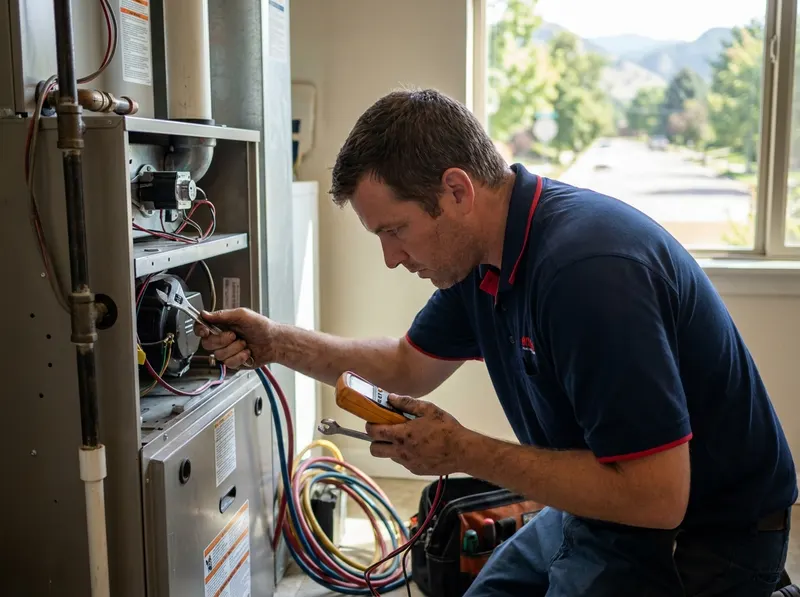
A tune-up is preventive, not corrective. If your furnace is already short-cycling, blowing cold air, or throwing an error code, that is a repair call, not a maintenance visit. Maintenance fits the homeowner who wants the system checked while it still runs — the trade-off is a modest annual cost against the higher price and worse timing of a January no-heat emergency. Boulder's cold snaps arrive fast when downslope winds push off the foothills, and a furnace that limps through fall often quits on the first single-digit night.
Older housing stock shapes what a tune-up finds here. Mapleton Hill and Whittier homes frequently run furnaces retrofitted into original basements, where tight ductwork and older venting deserve a close combustion and draft check. Newlands and North Boulder (NoBo) properties tend toward newer high-efficiency condensing units, where the tune-up focus shifts to clearing the condensate drain and inspecting the PVC intake and exhaust for blockage. Table Mesa and Martin Acres ranch homes often have the furnace in a utility closet with a return that pulls dust aggressively — filter and blower-wheel cleaning matter most there.
Altitude is a real variable in Boulder. Gas appliances installed above 5,000 feet may need burner orifices or gas pressure set for the thinner air, and a proper tune-up confirms the unit is firing correctly rather than running rich. Homes in Gunbarrel and up around Wonderland Hill see wind-driven dust and cottonwood debris that clog outdoor heat-pump coils and fresh-air intakes faster than a sealed subdivision would. University Hill rentals and student-occupied homes are worth an annual check simply because filters go unchanged for long stretches.
A tune-up also protects your equipment warranty. Many furnace manufacturers require documented annual service to keep coverage valid, and a maintenance record helps if a warranty claim comes up later. If the technician finds a failing igniter, a cracked heat exchanger, or a gas leak during the visit, that becomes a separate repair discussion — the tune-up itself is inspection and cleaning, with any parts quoted before work proceeds.
| Single furnace tune-up | $150–$225 |
| Two-system tune-up (dual furnace) | $250–$375 |
| Heat pump maintenance | $175–$275 |
| Tune-up plus filter replacement | $175–$260 |
Once a year is right for most Boulder homes, ideally in early fall. Scheduling before the first foothills cold snap means any needed repair is handled before you rely on the heat nightly.
Yes. Boulder sits above 5,000 feet, and gas furnaces may need burner and gas-pressure settings adjusted for thinner air. A tune-up confirms the unit is firing correctly for the local elevation.
A Boulder tune-up covers combustion analysis, burner and flame-sensor cleaning, filter check, thermostat calibration, blower inspection, and a carbon-monoxide safety test. Any parts found failing are quoted separately before repair.
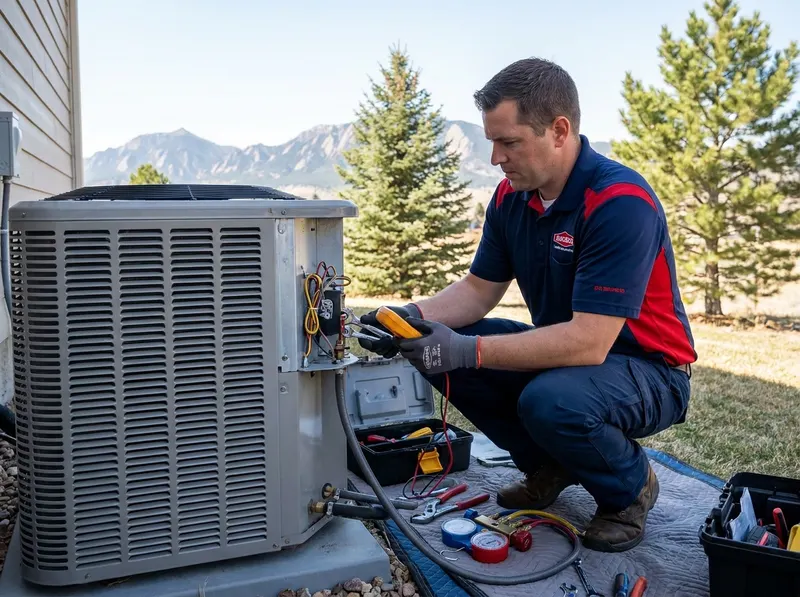
Boulder's AC failures cluster in July and August, when afternoon highs push condensers hard and evening downslope heat keeps homes warm past sunset. A unit that cooled fine in June often fails on the first stretch of 90-plus days because a weak capacitor only shows up under peak load. That is the most common repair on older split systems in Martin Acres and Table Mesa ranch homes, where the outdoor unit has often run for 15 or more seasons.
Repair fits when the system is under roughly 12 years old, the failure is a single component, and the rest of the equipment is sound. A capacitor, contactor, or fan motor swap on a 2015 condenser is a clear repair, not a replacement. The trade-off shifts once a compressor fails or a refrigerant leak turns up on an R-22 system: R-22 is no longer produced, so a recharge is expensive and temporary, and putting $1,000 into a 20-year-old unit rarely makes sense. In those cases a technician will lay out repair-versus-replace numbers rather than push either way.
Boulder's older housing stock adds a few local wrinkles. Mapleton Hill and Whittier homes with retrofit AC often have tight condenser placement against side yards and fences, which affects airflow and can cause repeat high-head-pressure trips until the unit is cleared. Newlands and Wonderland Hill houses on sloped lots sometimes have condensers set on settling pads, and an out-of-level unit stresses the compressor over time. NoBo and Gunbarrel homes closer to open space collect cottonwood fluff and grass debris in the coil, a frequent cause of the frozen evaporator and warm-air complaints we see there. On University Hill, older rental conversions occasionally have undersized or aging wiring feeding the condenser, worth checking before assuming the AC itself is the fault.
A proper diagnostic checks refrigerant pressures, electrical draw, capacitor microfarads, and airflow before naming a part, so the repair matches the actual failure. Refrigerant is never simply topped off without finding the leak, because a leaking system that gets recharged will fail again the same season.
| Diagnostic / service call (minimum) | $150 |
| Run capacitor replacement | $150-$300 |
| Contactor replacement | $150-$325 |
| Condenser fan motor replacement | $300-$650 |
| Refrigerant leak repair and recharge | $400-$800+ |
| Compressor repair (assessed on-site) | quoted after diagnosis |
Most single-part AC repairs in Boulder finish in one visit. Common parts like capacitors and contactors are typically stocked; a specialty motor or compressor may require a return trip if it must be ordered.
Warm air from a Boulder AC is usually repairable and most often traces to a low refrigerant charge, a frozen evaporator coil, or a failed capacitor. A diagnostic identifies which one before any part is replaced.
Repair generally makes sense for Boulder systems under about 12 years old with a single failed part. Replacement is worth considering when the compressor fails or the unit uses R-22 refrigerant, since R-22 recharges are costly and short-lived.
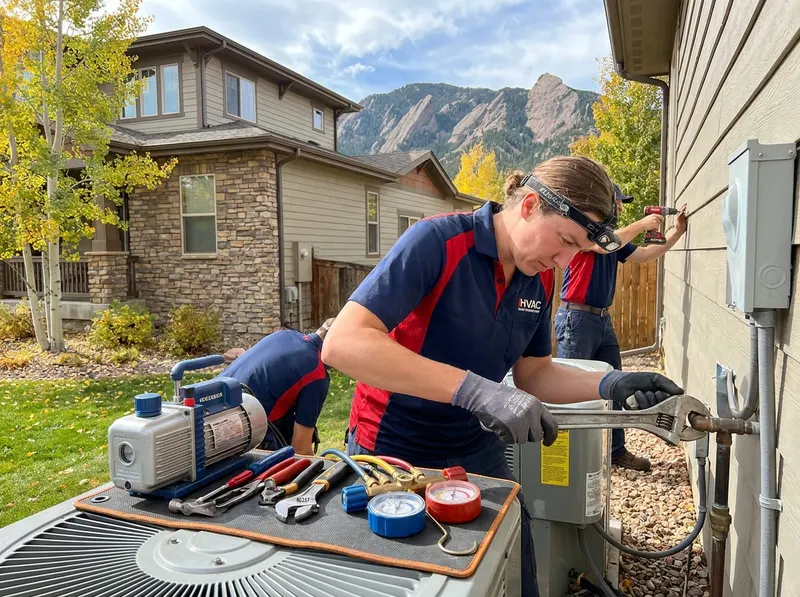
Choosing the right system starts with the house itself, not a catalog number. Boulder's mix of housing stock matters here: a brick foursquare in Mapleton Hill with plaster walls and no existing ducts is a different job than a 1970s ranch in Table Mesa that already has a furnace and a duct run ready for a central AC coil. Where ductwork exists and is in good shape, a central air conditioner tied to the furnace blower is usually the straightforward path. Where ducts are missing, cramped, or would tear up finished walls, a ductless mini-split lets us cool room by room without demolition, which is common in the older homes near Whittier and University Hill.
Sizing is where Boulder installs go right or wrong. The city sits above 5,300 feet, and thin dry air changes how cooling equipment performs, so we run a load calculation instead of guessing by square footage. An oversized unit short-cycles, cools unevenly, and wears out faster; an undersized one runs flat out on the hottest July afternoons and never quite catches up. Homes in Newlands and Wonderland Hill with large west-facing glass toward the Flatirons pick up heavy afternoon solar gain, and we account for that when we spec tonnage.
Heat pumps deserve a mention because more Boulder homeowners are pairing cooling with heating in a single system. A heat pump cools like an AC in summer and heats efficiently in the shoulder seasons, which fits well in North Boulder (NoBo) and Gunbarrel where newer construction and electrical upgrades make the switch practical. The trade-off is higher upfront equipment cost against lower operating cost and one system doing two jobs. On a free on-site visit we lay out the options side by side so you can decide with real numbers.
Installation quality shows up in the details buyers never see: level condenser pads that drain away from the foundation, refrigerant lines charged to manufacturer weight, condensate routed so it doesn't sit in a Martin Acres crawlspace, and a startup test that confirms the temperature split across the coil. We handle permitting where Boulder County requires it and leave the system running before we pack up.
| Minimum service charge | $150 |
| Central AC install (existing ductwork) | market-range ballpark; confirmed on-site |
| Ductless mini-split (single zone) | higher ballpark; confirmed on-site |
| Ductless mini-split (multi-zone) | varies by number of heads; confirmed on-site |
| Heat pump install | market-range ballpark; confirmed on-site |
Most single-system AC installs in Boulder finish in one day. Ductless mini-split jobs with several indoor heads can extend into a second day depending on line-set routing.
Yes. In older Boulder homes near Mapleton Hill and University Hill without existing ducts, a ductless mini-split cools rooms individually without tearing into finished plaster walls.
It depends on the specific home, not just square footage. Boulder's altitude and afternoon solar gain on west-facing rooms affect sizing, so we run a load calculation on-site before recommending a unit.
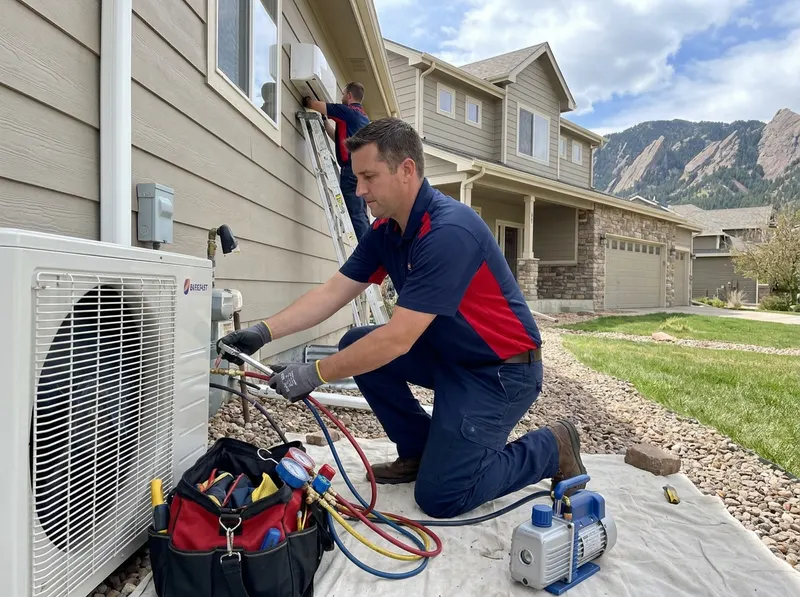
Mini-splits fit best where adding or extending ductwork is impractical or expensive. Many Mapleton Hill and Whittier homes were built before central air was common, and running new ducts through plaster walls and tight attics often costs more than a ductless system that only needs a three-inch wall penetration for the line set. The same logic applies to converted attics on University Hill and finished basements in Martin Acres, where a single indoor head can condition a space that the existing furnace never reaches evenly.
The trade-off versus central air is coverage and appearance. A central system with existing ductwork treats the whole house from one air handler, while a mini-split conditions specific zones through visible indoor units. For a Newlands remodel or a Table Mesa bonus room, that zoning is an advantage — you heat or cool only the space in use and set each zone to its own temperature. For a home that already has sound ductwork and wants uniform whole-house comfort, a central system or a ducted heat pump is usually the better match. We walk through both during the visit rather than pushing one path.
Boulder's climate suits heat-pump mini-splits well. Cold-climate models hold useful heating capacity into the low temperatures common on winter mornings near Chautauqua and along the foothills, and they cool efficiently through the dry summer heat that builds in NoBo and Gunbarrel. Correct sizing matters more than raw capacity: an oversized head short-cycles and leaves rooms clammy, while an undersized one runs constantly. We size each zone to the actual room, factoring in sun exposure, insulation, and ceiling height, so a west-facing Wonderland Hill living room gets more capacity than a shaded bedroom on the same system.
Placement is part of the job. Indoor heads work best high on an interior or exterior wall with clear airflow, and the outdoor unit needs a stable pad or bracket with room for airflow and winter snow clearance. We plan line-set routing to keep runs short and hidden where possible, which protects both efficiency and the look of the room.
| Service or diagnostic visit (minimum) | from $150 |
| Single-zone mini-split, installed | $4,000-$7,000 |
| Two-zone mini-split system, installed | $7,000-$11,000 |
| Three-plus-zone system, installed | $11,000-$18,000+ |
| Add indoor head to existing system | $1,500-$3,000 per head |
Yes. Ductless mini-splits are one of the best options for older Boulder homes in areas like Mapleton Hill and Whittier that were built without ductwork, since installation only requires a small wall penetration rather than tearing into plaster to run ducts.
Cold-climate mini-split heat pumps hold useful heating output through the low temperatures common on Boulder winter mornings near the foothills and Chautauqua. Proper sizing and model selection determine how well a system performs in the coldest stretches.
It depends on the layout and which zones you want to condition. A single Boulder room or addition often needs just one head, while whole-home coverage in a larger Newlands or Table Mesa house may use three or more, each sized to its own room during the on-site assessment.
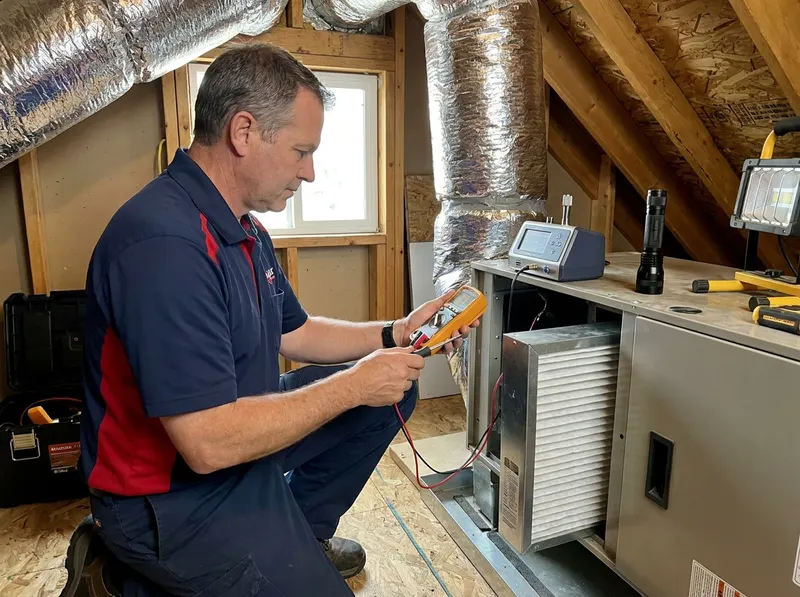
Boulder's climate makes indoor air quality a year-round concern rather than a seasonal add-on. The relative humidity here frequently drops below 20 percent in winter, which dries out sinuses, cracks wood floors in older Mapleton Hill and Whittier homes, and lets static electricity build. A whole-home humidifier tied into the furnace corrects this without the daily refilling a portable unit demands. In late summer, smoke from regional wildfires settles into the valley and against the Flatirons, and a high-MERV media filter or an electronic air cleaner removes far more of that fine particulate than the thin one-inch filter most furnaces ship with.
Choosing the right system depends on the problem you are solving. If dust and allergens are the main complaint, a deep-pleat media cabinet filter (MERV 11 to 16) is usually the most cost-effective fit and only needs replacement once or twice a year. If odors, smoke, or biological growth are the concern, an in-duct air purifier or UV system targets those directly. If your home feels tight and stuffy, common in newer, well-sealed Gunbarrel and North Boulder builds, an energy-recovery ventilator brings in fresh air without dumping your heated air outside. The trade-off is straightforward: filters are the lowest upfront cost, ventilators cost more but address air freshness that filtration alone cannot.
Many Boulder homes benefit from more than one component, but not every home needs the full stack. A century-old Newlands bungalow with drafty windows already exchanges plenty of air and may only need better filtration and humidity, while a sealed Table Mesa or Martin Acres home closer to the mesa often benefits from added ventilation. We size and recommend based on your ductwork, blower capacity, and the specific issues you describe, so the on-site assessment matters. Undersized components choke airflow and overwork the furnace; oversized ones waste money.
Installation integrates with your existing furnace and ducts, so homes near Chautauqua, University Hill, or Wonderland Hill with older systems may need a quick capacity check before adding equipment. We confirm the blower can handle the added static pressure of a denser filter or purifier before installing, which protects the heating system you already own.
| Whole-home media filter cabinet, installed | $400 - $900 |
| In-duct air purifier or UV system | $700 - $1,600 |
| Whole-home humidifier, installed | $500 - $1,200 |
| Energy-recovery ventilator (ERV), installed | $1,400 - $2,500 |
| Minimum service charge | $150 |
Many Boulder homes benefit from one because winter humidity here often falls below 20 percent, which dries skin and sinuses and cracks wood floors and trim. A whole-home humidifier tied into the furnace maintains a steady level without daily refilling, unlike a portable unit.
Yes. A high-MERV media filter or an in-duct air purifier captures much of the fine particulate that wildfire smoke pushes into the Boulder valley in late summer. It filters the air far more effectively than the standard one-inch furnace filter.
Whole-home IAQ upgrades in Boulder typically run $400 to $2,500 depending on the component, with the minimum service charge at $150. These are ballpark ranges; the exact price is confirmed during a free on-site assessment.
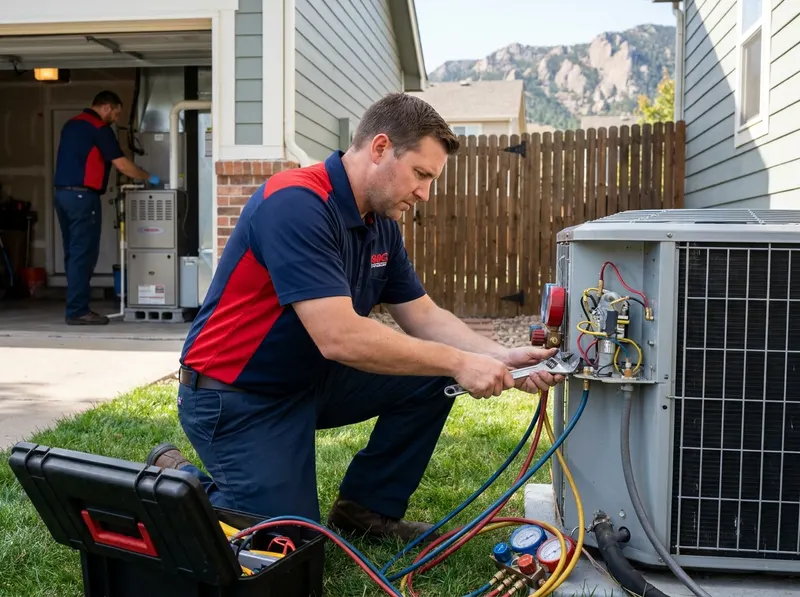
A maintenance plan makes the most sense for homeowners who plan to keep their equipment several years and want to protect it. Boulder's climate is hard on HVAC systems in a specific way: the dry air and high altitude around Table Mesa and NCAR mean furnaces cycle heavily through long heating seasons, while summer afternoons near Chautauqua and the Flatirons still push air conditioners and heat pumps during peak demand. Two visits a year keep burners, coils, and blower components clean so the system runs closer to its rated efficiency.
A plan fits differently than one-off service. If you only call when something breaks, you pay full trip and diagnostic pricing each time and compete for slots during the busiest weeks. A plan spreads inspections across the calendar and often includes discounted repair rates and priority scheduling, which matters when a January cold snap has every furnace tech in Boulder County booked out. The trade-off is a recurring cost even in years when nothing goes wrong, so the value comes from equipment longevity and fewer surprise breakdowns rather than a guaranteed dollar saving.
Older homes in Whittier, Mapleton Hill, and University Hill often have furnaces and ductwork that benefit most from regular attention, since aging heat exchangers and dust buildup show up early during a scheduled inspection. Newer builds in North Boulder (NoBo), Gunbarrel, and parts of Wonderland Hill may run heat pumps and high-efficiency systems that hold their warranty coverage better with documented annual maintenance. Homes in Newlands and Martin Acres with mixed-age equipment get a clear read on what to plan for and when to budget for replacement.
Each visit includes a written summary of readings and any recommended work, so there is no pressure and no vague verbal estimate. Exact plan pricing depends on the number of systems and the type of equipment, and it is confirmed before enrollment. Call (720) 832-9439 to talk through what your home needs.
| Single system annual plan (one furnace + one AC) | $150-$300/year |
| Two-system or heat pump plan | $250-$450/year |
| Single seasonal tune-up visit (plan minimum) | $150-$225 |
| Add-on system per unit | From $150 |
Twice a year is the standard for Boulder homes: a spring visit for the AC or heat pump and a fall visit for the furnace. Boulder's long heating season and dry high-altitude air put steady strain on equipment, so two checks catch wear before peak demand.
For older Boulder homes in Mapleton Hill and Whittier, a maintenance plan is usually worth it because aging heat exchangers, burners, and ductwork show early warning signs during scheduled inspections. Catching a cracked or dirty component early is far cheaper than a mid-winter failure.
Yes, most maintenance plans in Boulder include priority scheduling, which moves plan members ahead of the queue for repairs. This matters during cold snaps when furnace calls across Boulder County spike and non-members wait longer.
If your furnace is under about 12 years old and only one part failed, choose a repair — most single-component fixes land far below a full replacement and keep the system running for years. If the furnace is 15-plus years old, has cracked heat exchanger risk, or has needed repeated repairs, choose a full replacement so you stop paying twice. If you have ductwork already and want the simplest AC upgrade, a central air system fits best; if you're cooling an addition, a converted attic on University Hill, or a Mapleton Hill home with no ducts, a ductless mini-split fits better because it needs no ductwork. The trade-off is straightforward: ductless costs more per zone up front but avoids the disruption and expense of adding ducts, while central air is cheaper per square foot only when usable ductwork already exists. Between a single-zone and multi-zone mini-split, a single zone fits one problem room like a bonus room over a garage, while a multi-zone handles a whole home's worth of rooms from one outdoor condenser — the trade-off is roughly double the equipment cost for the ability to set each room to its own temperature. On the heating side, a standard-efficiency gas furnace costs less up front but a high-efficiency condensing model recovers that gap over years of lower gas bills, which matters more in a home that runs the furnace hard from October through February. For year-round comfort in a tightly sealed newer NoBo home, pair the system upgrade with indoor air-quality equipment; the trade-off there is a modest added cost against noticeably cleaner, less dry winter air. And when you're deciding between a bare-bones repair and a maintenance plan, the plan makes sense if you'd rather catch a failing ignitor or weak capacitor before it becomes a no-heat call at midnight — the trade-off is a scheduled fee against fewer surprise breakdowns.
| On-site minimum / small diagnostic visit | from $150 |
| Furnace repair (single component) | $150–$650 |
| Heating or cooling tune-up | $150–$300 |
| Ignitor or flame-sensor replacement | $150–$400 |
| Blower motor replacement | $400–$1,200 |
| AC repair (capacitor, refrigerant, controls) | $200–$900 |
| Compressor replacement | $1,200–$2,800 |
| Furnace replacement (installed) | $4,500–$9,500 |
| High-efficiency furnace upgrade (installed) | $6,000–$11,000 |
| Central AC installation (installed) | $5,000–$11,000 |
| Ductless mini-split, single zone (installed) | $4,000–$7,500 |
| Ductless mini-split, multi-zone (installed) | $8,000–$18,000 |
| Whole-home humidifier (installed) | $500–$1,200 |
| Indoor air-quality / filtration equipment (installed) | $500–$3,000 |
| Seasonal maintenance plan (annual) | $150–$350 |
Your exact price is confirmed before any work begins.
Boulder's mix of century-old homes near Chautauqua Park and Mapleton Hill and newer, tightly sealed builds out in Gunbarrel means there is no one-size furnace or AC answer here. The city sits above 5,300 feet, so combustion equipment needs derating for altitude and cooling loads run lighter than at sea level — a detail that gets missed when systems are simply swapped like-for-like. Many older University Hill and Whittier homes have no ductwork at all, which is exactly where ductless mini-splits solve a problem central air can't touch without a costly retrofit. Homes in Newlands and along the foothills toward NCAR and the Mesa Laboratory see sharp temperature swings between sunny afternoons and cold nights, which pushes furnaces and thermostats harder than the daytime highs suggest. Late-summer and early-fall wildfire smoke drifting into the valley also drives real demand for better filtration, and the dry high-desert air makes whole-home humidifiers a common winter add-on for homes near the Boulder Creek Path and Wonderland Hill. Because Table Mesa and Martin Acres hold a lot of the mid-century ranch stock, those homes often run original ductwork that benefits from a load calculation before any new AC drops in, rather than assuming the old system was sized right.
Neighborhoods we cover: Whittier, Mapleton Hill, Newlands, North Boulder (NoBo), Table Mesa, Martin Acres, Gunbarrel, Chautauqua, Wonderland Hill, University Hill.
No-heat calls in Boulder are prioritized, especially during sub-zero cold snaps when demand surges. Call (720) 832-9439 and describe the symptoms; you can also text a photo of the furnace model plate or thermostat to speed up the diagnosis.
The on-site minimum is $150, which covers a small diagnostic visit or minor repair. Furnace repairs typically run $150–$650, full furnace replacements $4,500–$9,500, and central AC installs $5,000–$11,000 — every figure is a ballpark, with the exact price confirmed free on-site before work starts.
Repair usually makes sense when the furnace is under about 12 years old and only one part failed. Replacement makes sense past 15 years, after repeated breakdowns, or if there's heat-exchanger risk — an on-site visit gives you the honest range for both so you can choose.
Yes. Ductless mini-splits are the go-to solution for older homes in Mapleton Hill, University Hill, and Whittier that have no ducts, along with additions and finished attics. A single zone conditions one room, while multi-zone systems handle several spaces from one outdoor unit.
Book heating tune-ups in September to beat the October-through-February furnace rush, and schedule cooling service in April for the best AC availability before the May-through-August spike. Spring and fall shoulder seasons offer the shortest lead times for planned system replacements.
Yes. Boulder sits above 5,300 feet, so gas furnaces are derated for altitude to run at their rated output, and cooling loads run lighter than at sea level. That is why a proper load calculation on-site beats a like-for-like swap, and it keeps you from paying for an oversized system that short-cycles.
A straightforward furnace or central AC replacement in a Boulder home is usually a one-day install, while a multi-zone ductless project can take longer depending on how many rooms and how far the line sets run. The on-site visit gives you a firm timeline along with the price before anything is scheduled.
Yes. High-efficiency condensing furnaces cost more up front — often $6,000 to $11,000 installed — but recover that gap through lower gas bills over years of hard winter use. The on-site visit weighs your home's runtime and square footage so you can compare a standard and high-efficiency option honestly.
Yes. High-efficiency whole-home filtration reduces the fine particles that push indoors during late-summer smoke events common in the Boulder valley. Paired with a whole-home humidifier for the dry high-altitude winters, it noticeably improves comfort in tightly sealed newer homes near NoBo and Gunbarrel.
Once a year per system is the general standard — a furnace tune-up in September and an AC check in April fits Boulder's seasonal demand best. Annual service also catches small faults early and helps keep manufacturer warranties valid, which often require documented maintenance.
Yes. Every price starts as an honest range, and the exact figure is confirmed free on-site before any work begins. Call (720) 832-9439 or text a photo of your current system to get the conversation started.